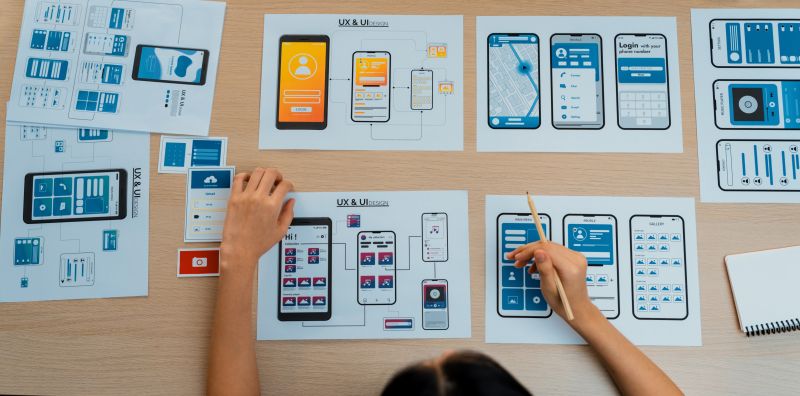
Many people have likely heard the term UX/UI, which is heavily associated with design work. However, it’s not limited to artistic design—it’s more about creating intuitive experiences for users. In today’s digital-first world, the demand for professionals with UX/UI skills continues to rise, especially among businesses operating online or offering digital services. UX and UI design play a critical role in creating seamless user interactions. In this article, we’ll explore what UX and UI mean, how they differ, and why they matter in the digital era.
UX (User Experience) and UI (User Interface) are two essential pillars of digital product design. These concepts are especially vital for businesses that offer services online, such as websites or mobile apps. The goal is to ensure users can easily navigate and engage with digital platforms. That’s where UX and UI designers come in—UX focuses on user experience, while UI centers on the visual and interactive elements. Though closely related, they differ in function and execution, as outlined below.
UX (User Experience)
UX, or User Experience Design, refers to the overall experience a person has when interacting with a digital product or service. The aim is to make the interaction simple, intuitive, and satisfying. A good UX design helps users achieve their goals efficiently—for example, making it easy to find products or information on a website. It focuses on smooth navigation, clear structure, and optimal usability.
Effective UX design reduces friction and enhances user satisfaction by prioritizing usability and accessibility. The process includes user journey mapping, usability testing, and consistent feedback loops to improve interactions. For businesses, implementing UX principles means better customer retention and higher engagement.
UI (User Interface)
UI, or User Interface Design, focuses on the visual aspects of a digital product—everything users see and interact with, such as buttons, icons, layouts, and color schemes. It’s about making interfaces not only aesthetically pleasing but also functionally effective. While UX sets the foundation, UI brings the design to life visually and interactively.
The role of UI is to create a visually intuitive and enjoyable experience. This includes choosing appropriate fonts, colors, spacing, and imagery. A well-crafted UI enhances brand identity and guides users through the interface with clarity and ease.
Key Differences Between UX and UI
At a glance, UX and UI may seem interchangeable, but their responsibilities differ. UX is about the logic and flow behind a product—how users complete tasks or reach goals. UI is about what users see and how they interact with visual elements. UX focuses on user journeys, while UI focuses on the interface design. To achieve optimal conversion and engagement, both must work hand-in-hand.
What Careers Require UX/UI Design Skills?
Today, many roles benefit from UX/UI knowledge to enhance user-centered solutions across industries. These include:
Website and mobile app development: Improve usability and interface design for platforms like e-commerce and banking apps.
Software design: Create intuitive dashboards and user flows for enterprise tools like CRM systems.
Game development: Design user interfaces and in-game experiences that boost engagement.
IoT and smart devices: Build interactive screens for smartwatches, smart homes, and connected health devices.
Digital product design: Enhance platforms like online learning tools, e-books, and digital media apps.
Service design: Streamline user experiences across multichannel services, including hotel booking or telehealth platforms.
Enterprise UX: Optimize internal systems for large organizations, such as ERP or inventory management software.
Good UX/UI design directly influences customer satisfaction and conversion rates. Whether you’re launching a website, building a mobile app, or managing an online store, intuitive design ensures that users can interact effortlessly. When customers enjoy their experience, they’re more likely to return and convert, improving repeat sales and long-term brand loyalty.
Integrating UX/UI into your digital marketing strategy can significantly differentiate your brand. In competitive markets, visually appealing and easy-to-use platforms attract more users and generate higher engagement. For SEO and content optimization, UX/UI principles also support clean navigation and structured layouts that align with search engine algorithms.
Essential Skills to Become a UX/UI Digital Designer
To start a career in UX/UI Digital, it’s important to develop the following skills, categorized into UX and UI competencies:
Key UX Skills
User research and data analysis
Persona development and user journey mapping
Information architecture design for usability
Wireframing and interactive prototyping
Key UI Skills
Strong visual design capabilities
Responsive design across devices
Interactive motion and micro-interactions
Proficiency in design tools such as Adobe XD, Figma, Sketch, InVision, or Axure
Conclusion
UX/UI Digital Design plays a crucial role in creating engaging and high-performing online platforms. It’s not just about aesthetics—it’s about delivering meaningful user experiences. UX/UI professionals collaborate with developers and marketing teams to design functional, user-friendly interfaces that drive results and meet business goals.
If you’re looking for expert guidance in digital marketing, website development, or UX/UI design, feel free to consult our team at Asia Search Solution. We offer full-service digital marketing solutions, including custom business website development and UX/UI optimization for better engagement and performance.

 Krittitee Tongdang